Services · Chapter I
Bespoke web design for Oxford businesses
No templates bought off a marketplace. Each site starts with a conversation, a stack of paper sketches and the words you need to say.
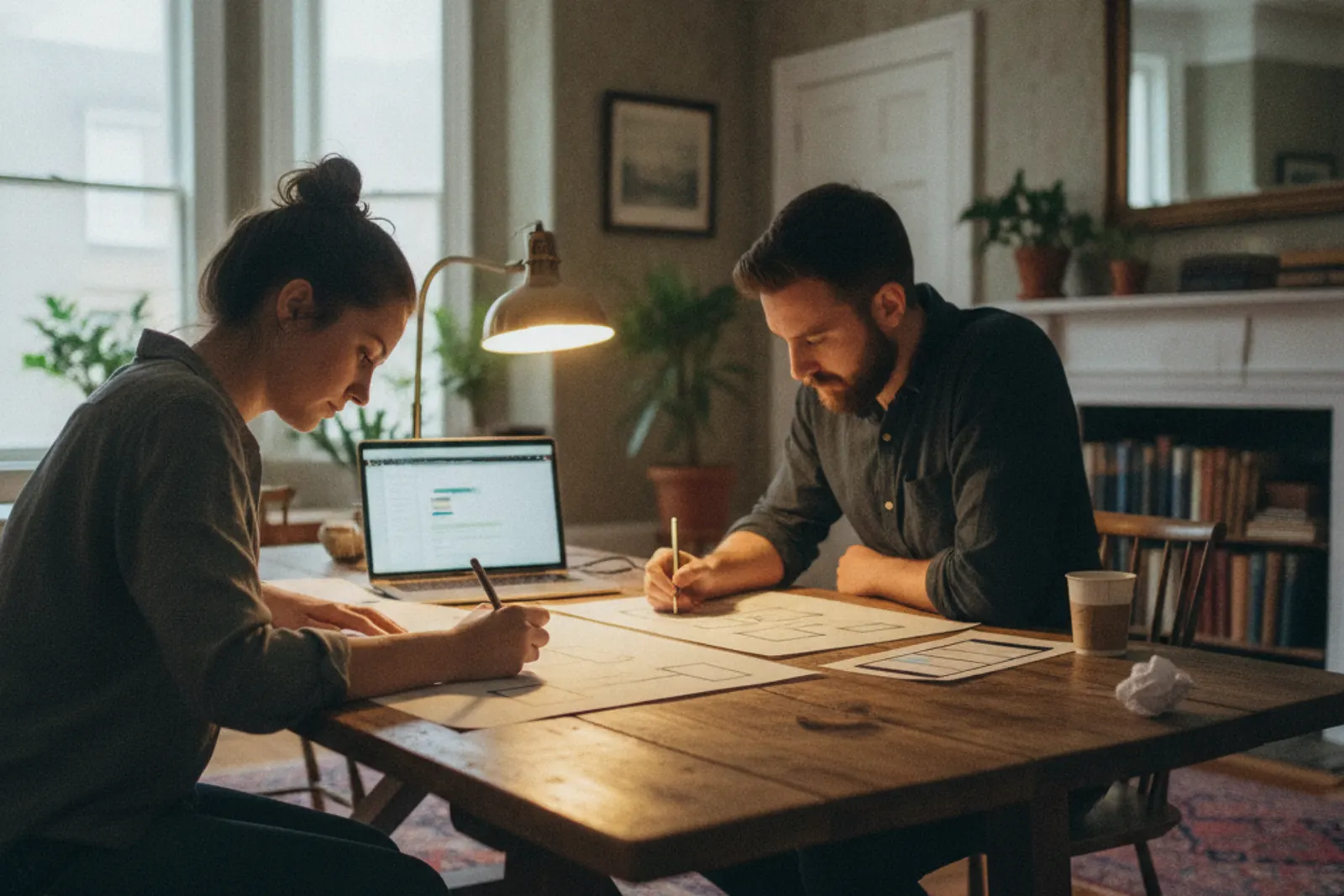
A bespoke website is one designed around your business rather than poured into someone else's layout. For an Oxford business, that difference shows up quickly: the page says what you do in the first sentence, the navigation follows how your customers think, and nothing on screen is there just because a theme came with it.
Who bespoke web design suits in Oxford
Bespoke work makes most sense when the website carries real weight in how you win work or explain yourself. Across local Oxford organisations, that tends to mean:
- Professional firms in Summertown and the city centre, where a prospective client compares three websites before calling anyone.
- Science and technology companies at Oxford Science Park, owned by Magdalen College, or the university's Begbroke Science Park, whose work is hard to explain and whose readers include investors and specialist recruits.
- Educational and publishing businesses, where long reading, structured content and good typography matter.
- Hospitality and visitor businesses whose customers decide from photographs and a quick read on a phone.
- Engineering and supply firms around Cowley, selling to buyers who want precise capability information.
If you need a single page with your opening hours and a phone number, a bespoke project is the wrong tool and we will say so.
What is included, step by step
- Discovery workshop. Two to three hours with the people who know your customers. We cover who visits, what they ask, what your competitors do, and what the current site gets right and wrong.
- Page plan. A written site map with the purpose of each page, its main reader and the one action we want them to take.
- Draft copy. We write, or edit your drafts, before design. See website copywriting for how that works.
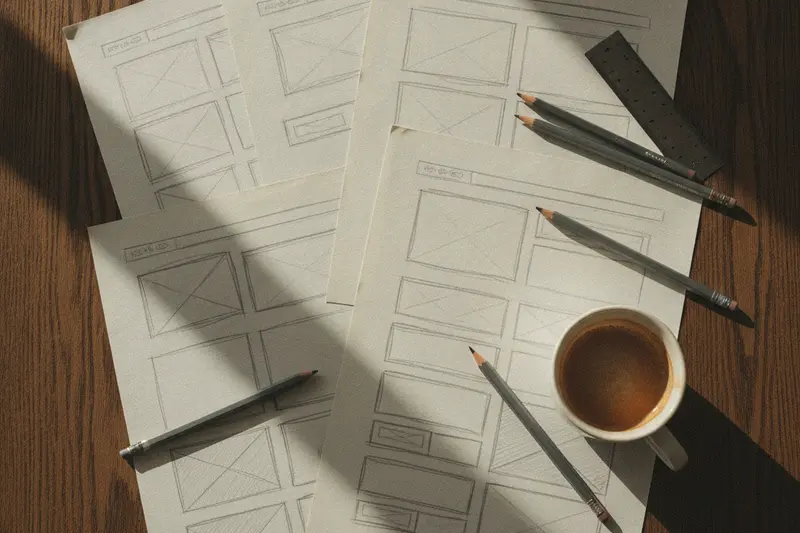
- Sketches and prototype. Paper sketches first, then a clickable grey prototype on mobile and desktop so you can feel the navigation before anything is styled.
- Visual design. Typography, colour, photography direction and the key page templates, with your real words in place.
- Build. Clean, light code on WordPress or a static setup, with editing screens shaped around your content.
- Testing. Real phones, several browsers, keyboard-only use, screen readers, slow connections, and every form submitted end to end.
- Launch. Redirects from old addresses, analytics, search console set-up, and a check the day after.
- Handover. A recorded walkthrough of the editor and a short written guide your team can refer back to.
How long it takes
| Project | Typical length | What usually sets the pace |
|---|---|---|
| Small business site, 5 to 10 pages | 6 to 8 weeks | Copy and photography |
| Professional firm or spin-out, 10 to 25 pages | 8 to 12 weeks | Feedback from partners or founders |
| Larger site with integrations or catalogue | 12 weeks or more | Third-party systems and content volume |
The single biggest cause of delay is content. When the words are agreed early, projects run close to plan. That is why we write first.
What drives the cost
We do not publish a fixed price list, because two ten-page sites can involve very different amounts of work. What moves the price most:
- Number of distinct page templates, not the number of pages. Twenty service pages built from one template cost far less than eight pages that each need their own layout.
- Copywriting. Writing from scratch takes more time than editing drafts you supply.
- Integrations with booking, CRM, recruitment or stock systems.
- Content migration from an old site, especially if it needs restructuring.
- Photography and illustration, which we brief and coordinate but usually commission separately.
- Accessibility requirements above the normal AA standard, or user testing with specific groups.
Every estimate we send is broken down by stage. If the total is more than you planned, we can show you what could be phased or simplified rather than just cutting the price and the quality with it.
Common mistakes we see
- Designing before writing. Layouts get built around placeholder text, then the real words do not fit.
- Copying a competitor's structure. Their customers and services are not yours.
- Too many calls to action. A page that asks visitors to do five things usually gets none of them done.
- Stock photography. Visitors to an Oxford business recognise generic images instantly. Real photographs of your people and premises build more trust.
- Choosing a design by committee. We ask for one decision-maker, who gathers views from colleagues and gives us consolidated feedback.
- Forgetting the editor. A beautiful site nobody can update will be out of date within a year.
What makes good web design for Oxford
Oxford is a city where people read. Visitors arrive from the university, the hospitals, the science parks and the tourist trade, and many of them judge an organisation on how clearly it writes. Good web design here tends to be calm and legible: good type, enough white space, short honest headings and pages that load quickly on a phone at a bus stop on the High Street.
That is the style we work in, though it is not one fixed look. A bakery in Jericho needs warmth and photographs of the counter. A medical device start-up needs credibility and a clear route for investors. The design follows the audience.
Built to be found
Every bespoke site is built with search in mind from the first sketch: sensible page titles, one clear heading per page, structured data, fast loading and a sitemap. We are a web design studio rather than a search agency, but nothing in the build will hold your rankings back, and we work alongside whoever handles your marketing.
How we measure whether it worked
Before launch we agree what success looks like, in your terms. Usually that is a short list:
- Enquiries, bookings or applications through the site, tracked as events in analytics.
- Search Console data for the pages and queries that matter to you.
- Core Web Vitals and loading times on mobile.
- Feedback from your team on how easy the site is to update.
- Any change in the quality of enquiries, which only you can judge.
We look at these with you at one month and three months after launch, and suggest small changes where the evidence points to them. We do not promise particular numbers, because they depend on your market as much as your website.
What you get
Sketches, a clickable prototype, designed pages for mobile and desktop, a built and tested site, and a handover session.
Typical length
Six to ten weeks for a small business site, depending mostly on how quickly the words come together.
Questions people ask
How much does a bespoke website cost?
It depends on the number of page types, the content and any integrations. We send a written estimate after a first call, broken down by stage, so you can see where the money goes before you commit.
Can we update the site ourselves?
Yes. Most of our bespoke sites run on WordPress or a light headless CMS, and we set up the editing screens around your content so updating a page does not need a developer.
Do you work with businesses outside Oxford?
Yes, across Oxfordshire and beyond. Most of our work is with organisations in and around the city, and we are happy to meet in person where that helps.
What do you need from us to start?
A couple of hours for a first workshop, access to your current site and analytics if you have them, and one person who can make decisions and gather feedback from colleagues.
Do you use templates at all?
We reuse our own tested code for things like forms, navigation and accessibility patterns, because there is no benefit in reinventing them. The layout, typography and page structure are designed for you.